What does OSHA require for farm sanitation?
OSHA 1928.110 covers hand-labor agricultural operations directly: potable water, toilet facilities and handwashing must be available, and workers cannot be made to walk more than a quarter mile to reach them. That is a different rule than OSHA portable toilet requirements for construction sites, which fall under 1926.51(c) instead. A farm with crews spread across several fields usually needs more than one unit just to keep every worker inside that quarter mile radius, not because of headcount alone. If your operation also runs a packing shed or a fixed building with employees, general industry ratios under 1910.141(c)(1)(i) may apply there instead of the field rule. Portsmouth Porta Pros places portable toilet rental units at the edge of active rows so crews are not walking off the clock to reach one. For crews spraying herbicides or insecticides, OSHA 1926.51(f)(1) requires washing facilities before workers eat, drink or leave the site, and a handwashing station rental unit set next to the toilets covers that. Hand sanitizer does not satisfy 29 CFR 1910.141(d)(2), which calls for actual soap and towels or a hand dryer, so we stock stations built for that standard rather than gel-only setups.
How many units does a farm need?
Start with the quarter mile rule, not a headcount chart. A large farm outside Portsmouth spread across multiple fields might need three or four units just so every crew has one within walking distance, even if total worker count would only require one unit under a stricter ratio. Use our how many porta potties do I need guide as a starting point, then adjust for field layout. A standard unit holds a 60 to 70 gallon tank and stands about 92 inches tall, sized to survive a season parked on uneven ground near irrigation lines or equipment paths. Seasonal harvest crews often rent by the month rather than the day, and monthly porta potty rental pricing runs $125 to $325 depending on service frequency and unit count. Farms running longer contracts, through planting and harvest both, sometimes do better locking in a season-long agreement instead of paying delivery fees twice. Check our porta potty rental cost page for how those numbers break down, and see porta potty rental per day if you only need coverage for a short window like a hay cutting or a one-week harvest push.
Where should units go on farm ground?
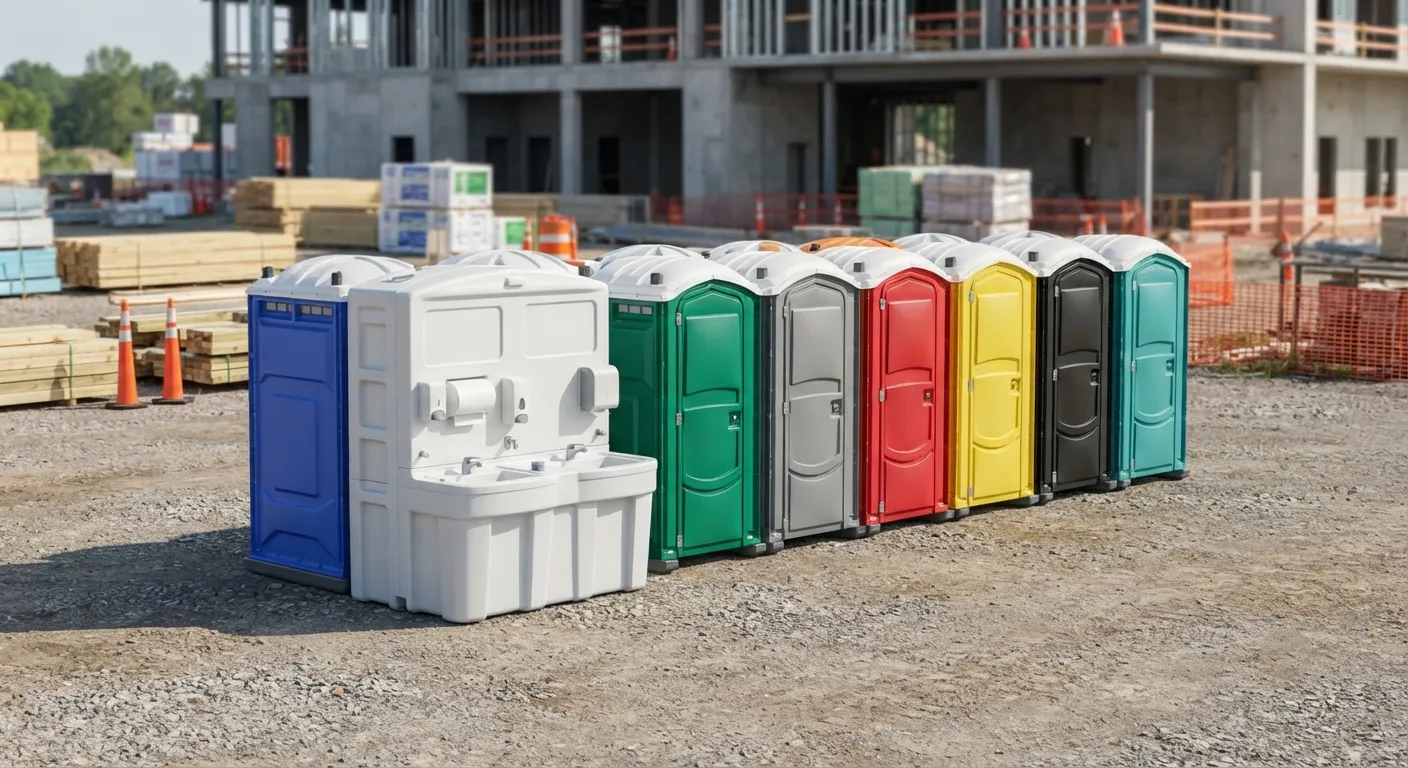
Set them at the field edge, on stable ground, near the access road the service truck already uses. Delivery trucks need a clear path in, and if a unit ever needs to sit on a roll-off pad or near a construction zone on the property, the truck needs roughly 60 feet of straight clearance behind it to maneuver. Farms near Portsmouth with soft or seasonal mud should plan a gravel pad or pallet base so units do not sink after a rain event. If your operation runs a farm stand or hosts a public event, our county fair restrooms and farm and agricultural restrooms pages both apply, and accessible unit placement should follow ADA Standards 213.2, which requires at least one accessible unit in any cluster, along with a 60 inch turning circle under 304.3.1. Operations closer to Chesapeake, about 20.5 miles south of Portsmouth, or Carrollton, 15.8 miles northwest, use the same placement logic even though delivery routes differ. If your farm also generates packaging waste, pallets or fencing scrap during harvest, pair your restroom order with a construction dumpster rental or temporary fence rental to keep the yard clear under OSHA 1926.25 housekeeping expectations.
| unit | duration | typical price |
|---|---|---|
| standard | day | $150 |
| standard | week | $200 |
| standard | month | $200 |
Need something sturdier than a single unit for a farm crew that eats and rests on site? Look at a deluxe flushable porta potty or a small restroom trailer rental for longer harvest seasons. Farms with a fixed labor camp sometimes add a portable sink rental unit near the bunkhouse instead of relying only on field-edge stations. For septic on the farmhouse or packing facility itself, see septic pumping service and how often to pump a septic tank, since a typical residential-size tank is pumped every 3 to 5 years depending on household size and tank capacity. Farms running a commercial kitchen or produce processing line should also check grease trap pumping, since an interceptor needs service once fats, oils and grease reach 25 percent of liquid depth.
How often are units serviced during harvest?
ANSI/PSAI Z4.3 sets a baseline of one service visit per week for up to 10 users across a 40 hour week. Busy harvest crews working longer hours or larger teams usually need twice-weekly service. See how often are porta potties cleaned for how that scales with crew size.
Do we need an ADA unit for farm workers?
If units are clustered rather than spread solo across fields, ADA Standards 213.2 requires at least one accessible unit per cluster, minimum one even for small groups. An ADA accessible porta potty rents for $120 to $240 a week. Check ADA restroom requirements for full detail.
Can we rent for just one harvest week?
Yes. Weekly standard unit rental runs $130 to $500 depending on count and service level. Short push crews doing a single cutting or picking week often rent this way rather than committing to a month. See porta potty rental per day if your window is even shorter.
What about handwashing after pesticide application?
OSHA 1926.51(f)(1) requires washing facilities where workers apply herbicides or insecticides, before they eat or leave. A hand sanitizer station rental alone does not meet 29 CFR 1910.141(d)(2); you need actual soap and towels or a dryer on site.
Does winter weather change farm restroom setup?
Cold snaps can freeze tank contents and lines in unheated units. See porta potty in winter for how we winterize units serving Portsmouth farms through the colder months, including tank additives and servicing adjustments.
Next step
Get a delivery date
Tell us the address, the dates and the headcount. We size the order and confirm the route.