
How do porta potties work?
The unit sits on a molded plastic base holding the tank underneath the seat. Waste drops straight down into that tank, and a blue or green chemical mix inside breaks down solids and locks in odor between service visits. There is no water line and no flush handle on a standard porta potty rental, which is why it works fine on a raw lot outside Portsmouth with zero utilities run yet. A vent stack pulls odor up and out rather than back at the user. Service techs pump the tank, rinse it, and re-dose the chemical on a route stop, typically weekly per ANSI/PSAI Z4.3, the baseline sanitation service standard for units seeing regular use. For a job site near Chesapeake, 20.5 miles south of Portsmouth, or a build closer in, the mechanics are identical. If you are still figuring out unit count, our how many porta potties do I need guide walks through it, and OSHA's ratio rule lives at OSHA portable toilet requirements.
How do flushable porta potties work?
A deluxe flushable porta potty adds a small onboard freshwater tank and a foot pump or hand lever that pushes a burst of water through the bowl into the same holding tank below. It feels closer to a bathroom at home. Nothing leaves the unit. The flush just moves waste from the bowl into the tank faster and rinses the bowl clean between uses, which matters for weddings and site offices where guests notice. These units still need the same pump-out service as a standard porta potty rental, just often on a shorter interval because of the added water volume. An ADA accessible porta potty can come in a flushable configuration too, and ADA Standards section 304.3.1 calls for a 60 inch turning circle inside so a wheelchair user can maneuver. Rates for either style run inside our posted bands; check porta potty rental cost or porta potty rental per day before booking.
How does a portable sink work?
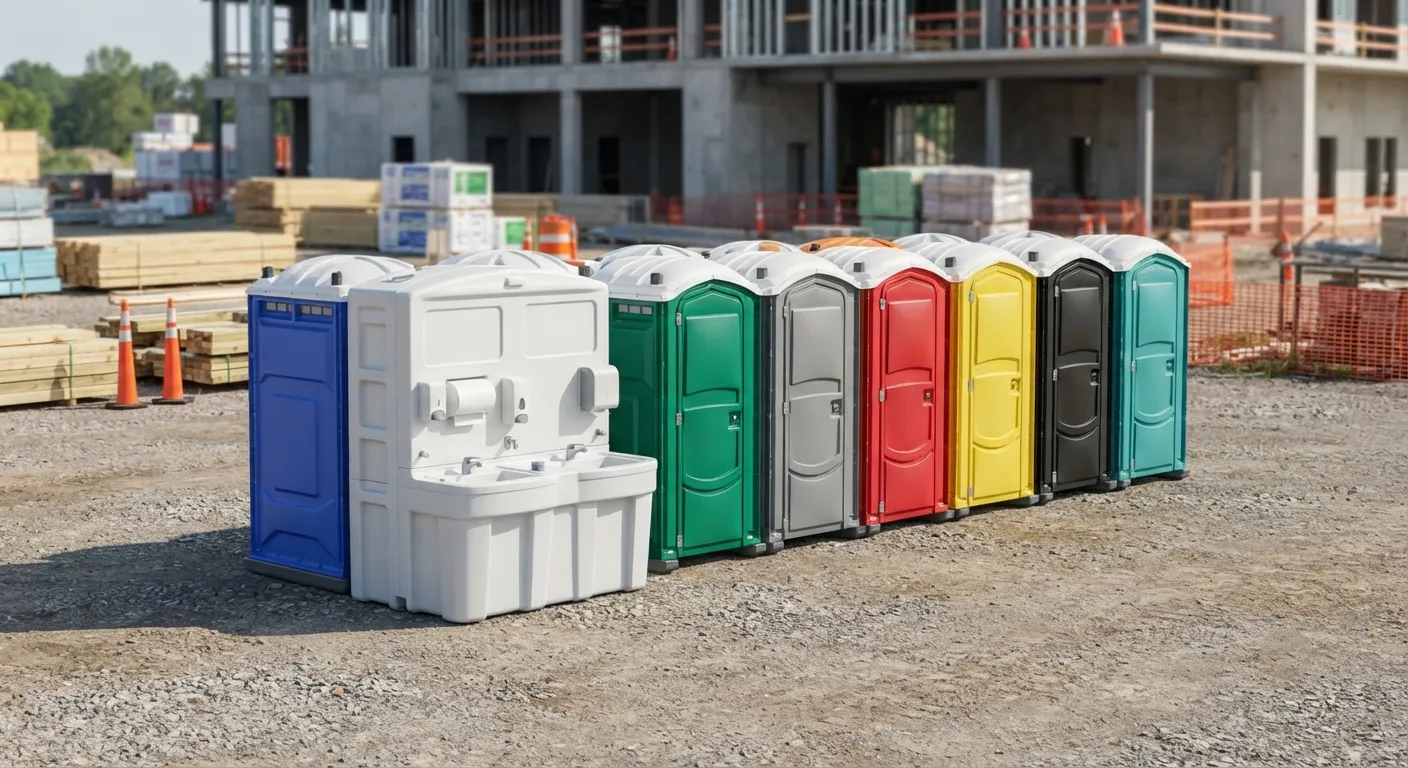
A portable sink rental or handwashing station rental pairs a freshwater reservoir with a foot pump or sensor that pushes water through a spout, and a gray water tank underneath catches the runoff. Soap and paper towels sit in built-in dispensers. Under 29 CFR 1910.141(d)(2), washing facilities need actual soap and towels or a dryer, not just hand sanitizer, so a real basin station beats a hand sanitizer station rental wherever OSHA compliance is the goal. If your crew is applying paints, coatings, herbicides or insecticides, OSHA 1926.51(f)(1) specifically requires washing facilities on top of general sanitation. A construction worker running to a porta-potty after handling chemicals still needs a sink close by, not across the lot. See handwashing requirements for the full breakdown, and OSHA 1926.51(a)(1) also requires an adequate supply of potable water at any place of employment, which these stations satisfy alongside toilets.
How do camping porta potties work?
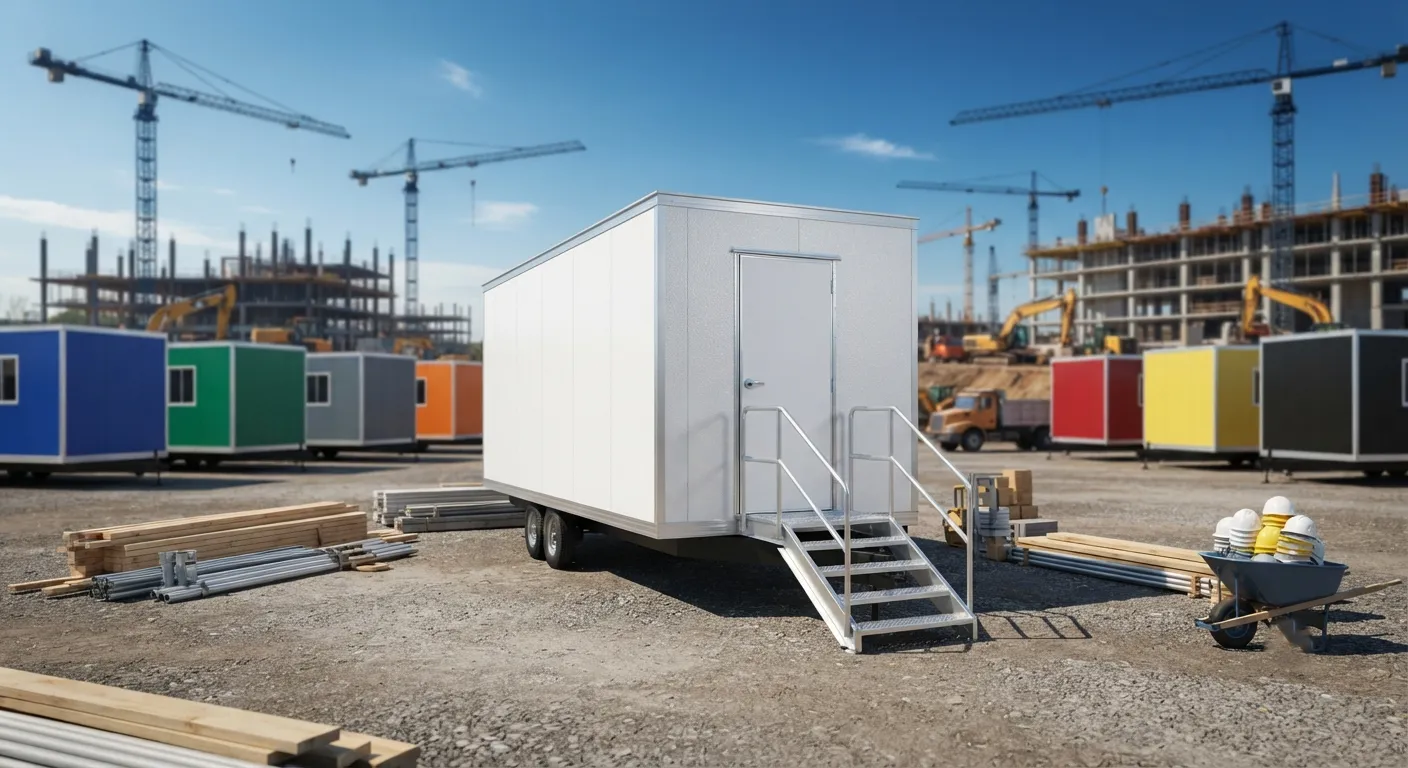
Camping and remote-site setups run the same tank-and-chemical system as a job site unit, just placed for foot traffic instead of trade access. A standard porta potty rental works fine for a weekend campout near Portsmouth, and pricing in that range sits well inside a standard weekend rate. Farther out, a property near Smithfield, 20.7 miles northwest of Portsmouth, or Carrollton, 15.8 miles northwest, gets the same unit and the same service routine, just a longer drive for our truck. For events pulling a crowd, an event restroom rental or festival restroom rental setup adds more units per the OSHA 1926.51(c) ratio logic even though that rule targets construction crews, not campers. Winter camping changes servicing slightly; see porta potty in winter for what holds up in cold weather.
Septic tank cleaning chemicals used in porta potties are a different product than what goes in a home septic tank. Portable unit chemicals are dosed for a small sealed tank and frequent pump-outs, not left to work for years. A residential septic tank, by contrast, typically gets pumped every 3 to 5 years depending on tank size and household load, covered in how often to pump a septic tank and septic tank pumping cost. If your unit is showing signs of an overdue service, our septic tank warning signs page covers what to watch for, and septic pumping service or emergency septic service covers the fix.
| unit | duration | typical price |
|---|---|---|
| standard | day | $150 |
| standard | week | $200 |
| deluxe | week | $250 |
| ada | day | $230 |
Do porta potties smell?
Not when serviced on schedule. The chemical dose neutralizes odor between pump-outs, and a vent stack carries gas up and away from the seat. Smell shows up mostly from overuse or a missed service stop. See do porta potties smell for causes and fixes.
Can I put anything down a porta potty?
No. Only human waste and toilet paper. Wipes, chemicals, and trash clog the tank and complicate pump-out. Keep a trash bag nearby for anything else, especially on multi-week construction site services jobs.
How often are porta potties cleaned?
Weekly is standard under ANSI/PSAI Z4.3 for units seeing regular traffic, though high-use events often get serviced more. Full detail is on how often are porta potties cleaned.
Is a portable sink required alongside a porta potty?
Often yes on job sites, especially under OSHA 1926.51(f)(1) when workers handle paints, coatings or pesticides. Standard sanitation alone falls under OSHA 1926.51(c). See handwashing requirements for specifics.
Where should a porta potty be placed on site?
On stable, level, slip-resistant ground per ADA Standards section 302.1, with a clear path at least 36 inches wide per ADA Standards section 403.5.1 if accessibility matters. Full guidance is in our porta potty placement guide.
Next step
Get a delivery date
Tell us the address, the dates and the headcount. We size the order and confirm the route.